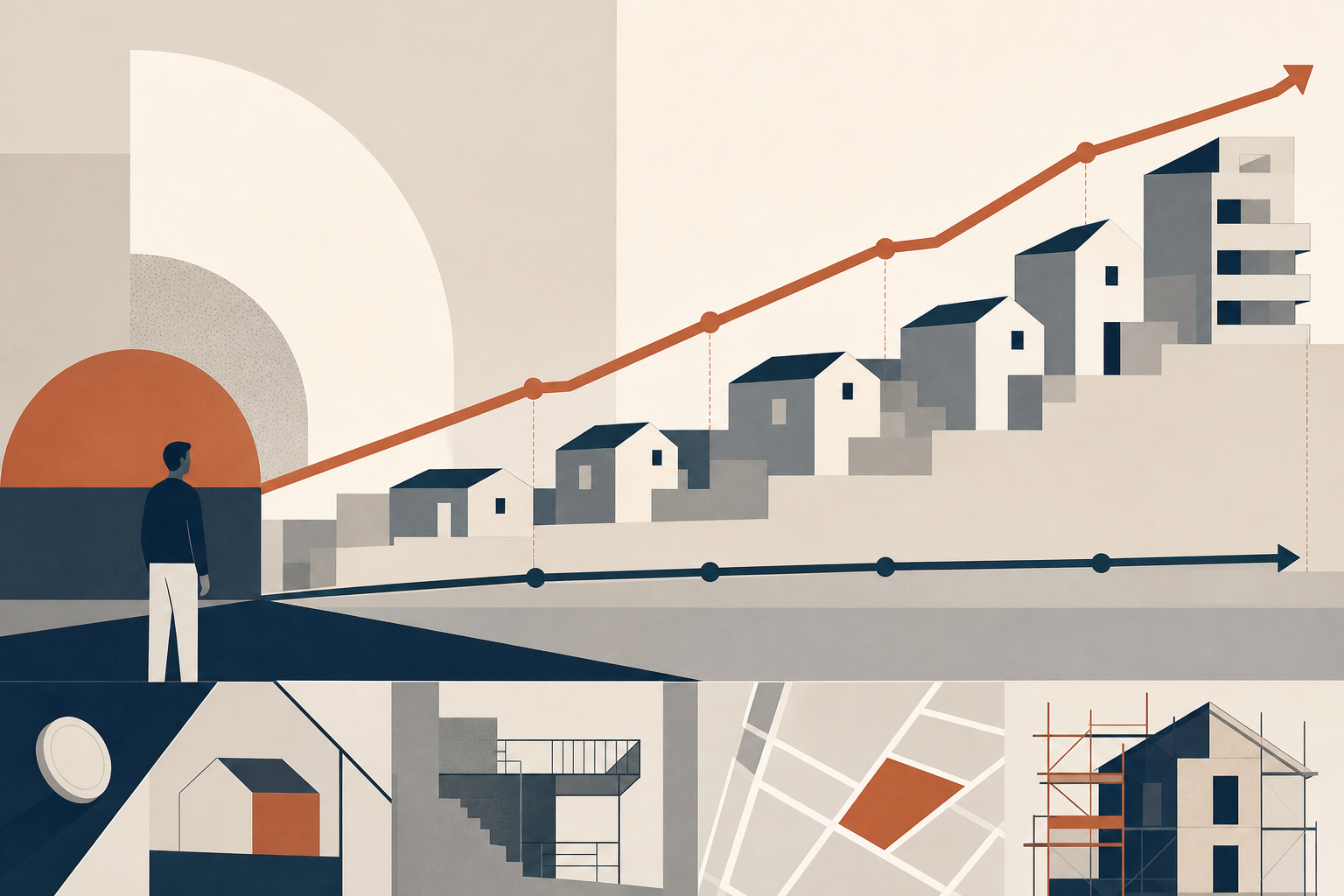
Rising house values meet the limit of household income
Asking prices, bank valuations and borrowing costs continue to place access to housing under pressure.
Advertised house prices increased by 7.5% in August. In July, the median bank valuation reached €2,240 per square metre and the average mortgage payment rose to €414.

Three indicators, the same pressure
The residential market entered late summer with further signs of rising values. In August 2026, the median advertised price of homes for sale in Portugal reached €3,207 per square metre, 7.5% more than a year earlier. The Lisbon Metropolitan Area recorded an annual increase of 5%, below the national average, while the district of Santarém saw one of the highest increases in the country, at 22.9%. (idealista.pt)
Advertised prices do not necessarily correspond to final transaction values, but they indicate the direction of supply entering the market. Another indicator, based on valuations carried out for lending purposes, confirms the trend. In July, the median bank valuation of housing reached €2,240 per square metre, a year-on-year increase of 15.2%. Around 34.1 thousand valuations were considered. (webinq.ine.pt)
Financing also weighs heavily
Rising property values coincide with a slight increase in the cost of existing borrowing. The implicit interest rate across all mortgage agreements rose to 3.135% in July. The average payment reached €414, €20 more than in July 2025. For agreements signed in the previous three months, the average payment reached €731, representing a year-on-year increase of 15.1%. (webinq.ine.pt)
This set of data helps explain why demand may remain active without access becoming easier. A higher bank valuation may make it possible to finance a more expensive purchase, but it also confirms that the asset required to secure the loan is more costly. At the same time, repayments depend on the principal, term, applicable rate, insurance and other charges.
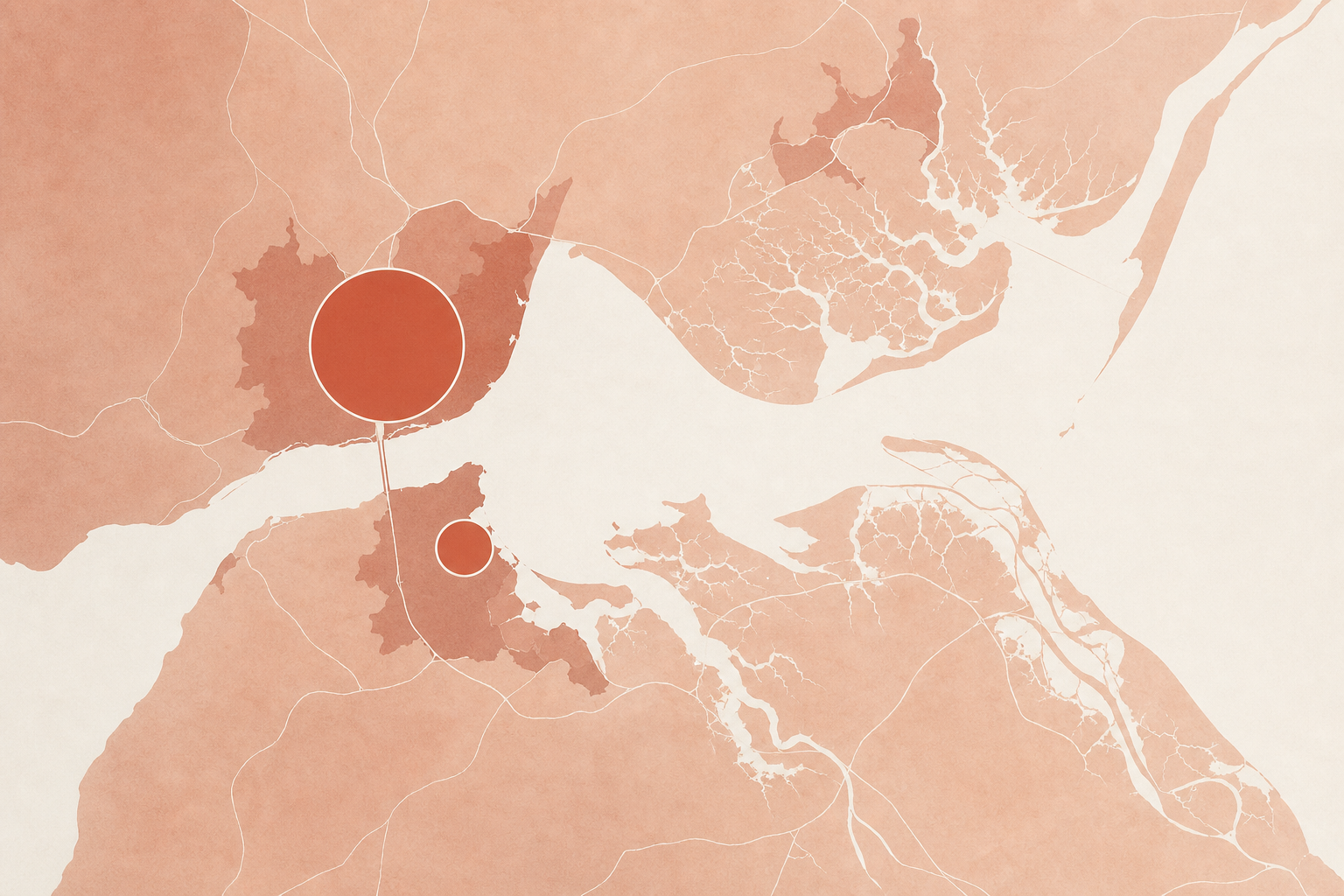
National averages conceal significant territorial differences. In Lisbon, absolute price levels continue to require substantial equity. In the Tagus Valley, faster percentage increases may reduce the relative advantage of areas previously sought as alternatives. Displaced demand does not eliminate pressure: it redistributes it to municipalities where supply, infrastructure and transport may not grow at the same pace.
Affordability as the central measure
Price per square metre is insufficient to assess access to housing. Analysis must relate price, disposable income, the initial deposit, repayments, mobility costs and property quality. A seemingly more affordable home may involve higher energy bills, a need for building work or longer daily journeys.
Rising asset values benefit owners and strengthen bank collateral, but widen the gap for those seeking to enter the market. Without greater diversity of supply — for purchase, rent and intermediate models — the constraint ceases to be the availability of credit and becomes households’ stable capacity to meet the total cost of living in a home.
Sources consulted
Banco de Portugal · Instituto Nacional de Estatística (INE) · Idealista News