There can be no land policy without a land register
The State has inventoried around 80,000 properties, and BUPi has identified 46% of the area covered by municipalities without a land register. Knowledge of the territory is infrastructure for housing and spatial planning.
Inventorying assets and locating properties does not automatically create available land. It does, however, provide the basis for deciding what can be transferred, rehabilitated, protected or developed.
Category: Architecture and the City
The State has inventoried around 80,000 properties, and BUPi has identified 46% of the area covered by municipalities without a land register. Knowledge of the territory is infrastructure for housing and spatial planning.
Estamo announced that it had registered around 80,000 State-owned properties, most of them rural. Since 2024, 95 assets valued at around 80 million euros have been transferred to 64 municipalities. In parallel, the Balcão Único do Prédio identified 46% of the area of mainland municipalities that did not have a land register.
The two figures describe different tasks, but they converge on the same problem. Land, assets and investment cannot be managed without knowing where properties are, what their boundaries are, who manages them and what constraints apply. The absence of this information delays projects, increases disputes and reduces the capacity to plan housing, infrastructure or fire prevention.
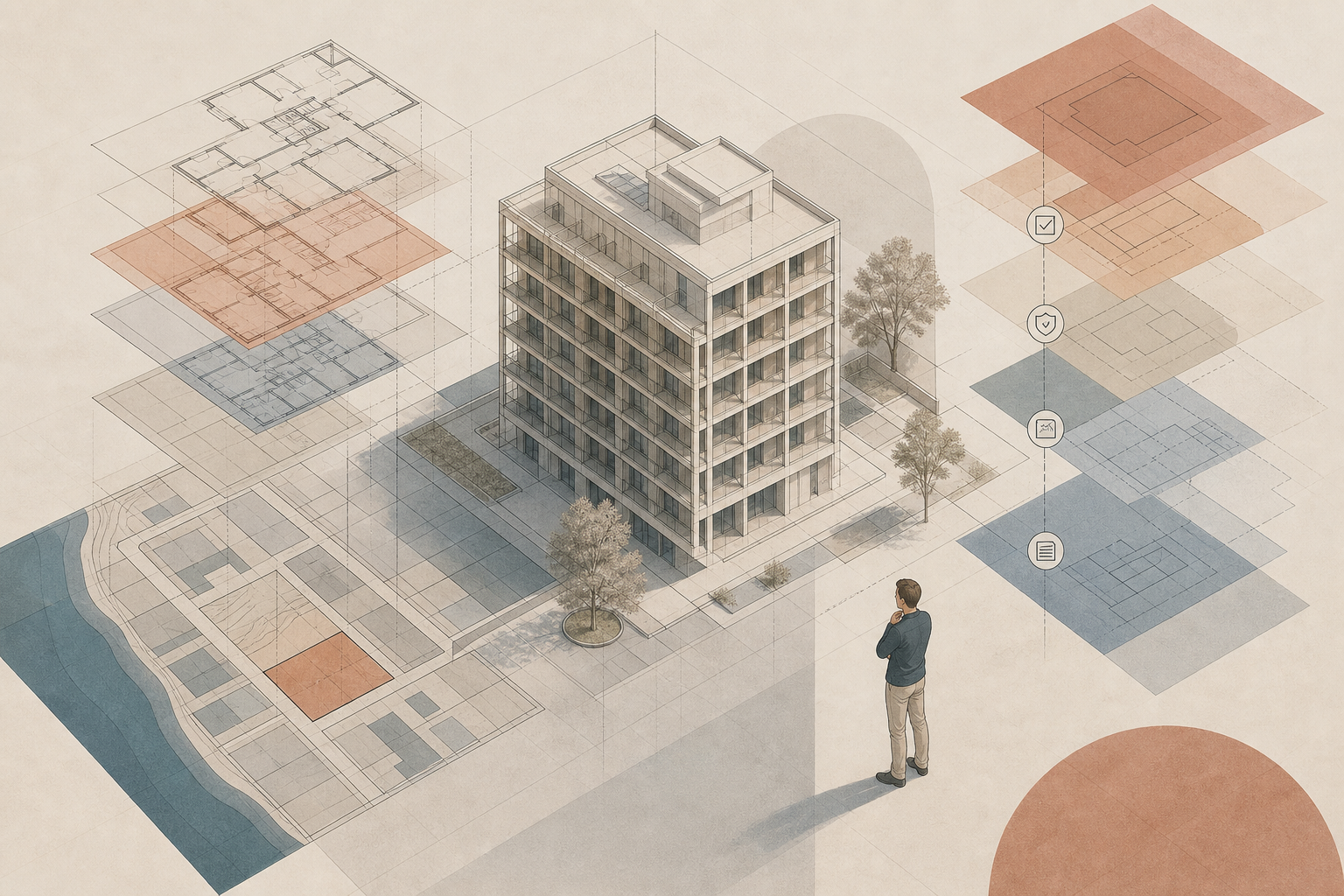
A public inventory is not the same as a portfolio ready for development. Many properties are rural, are occupied, have easements, contain dilapidated buildings, are subject to environmental restrictions or have public uses that should be preserved. Others may be poorly served by transport, water, sewerage or facilities. Before announcing housing capacity, it is necessary to assess location, ownership, planning status, infrastructure costs and the feasibility of adaptation.
Even so, knowledge of the assets changes the quality of decision-making. A municipality can compare acquisition, transfer, rehabilitation and new construction. It can avoid purchasing land when a suitable public asset exists, or recognise early that a particular property does not meet the intended programme. Transparency also makes it possible to scrutinise why an asset is retained, transferred or placed on the market.
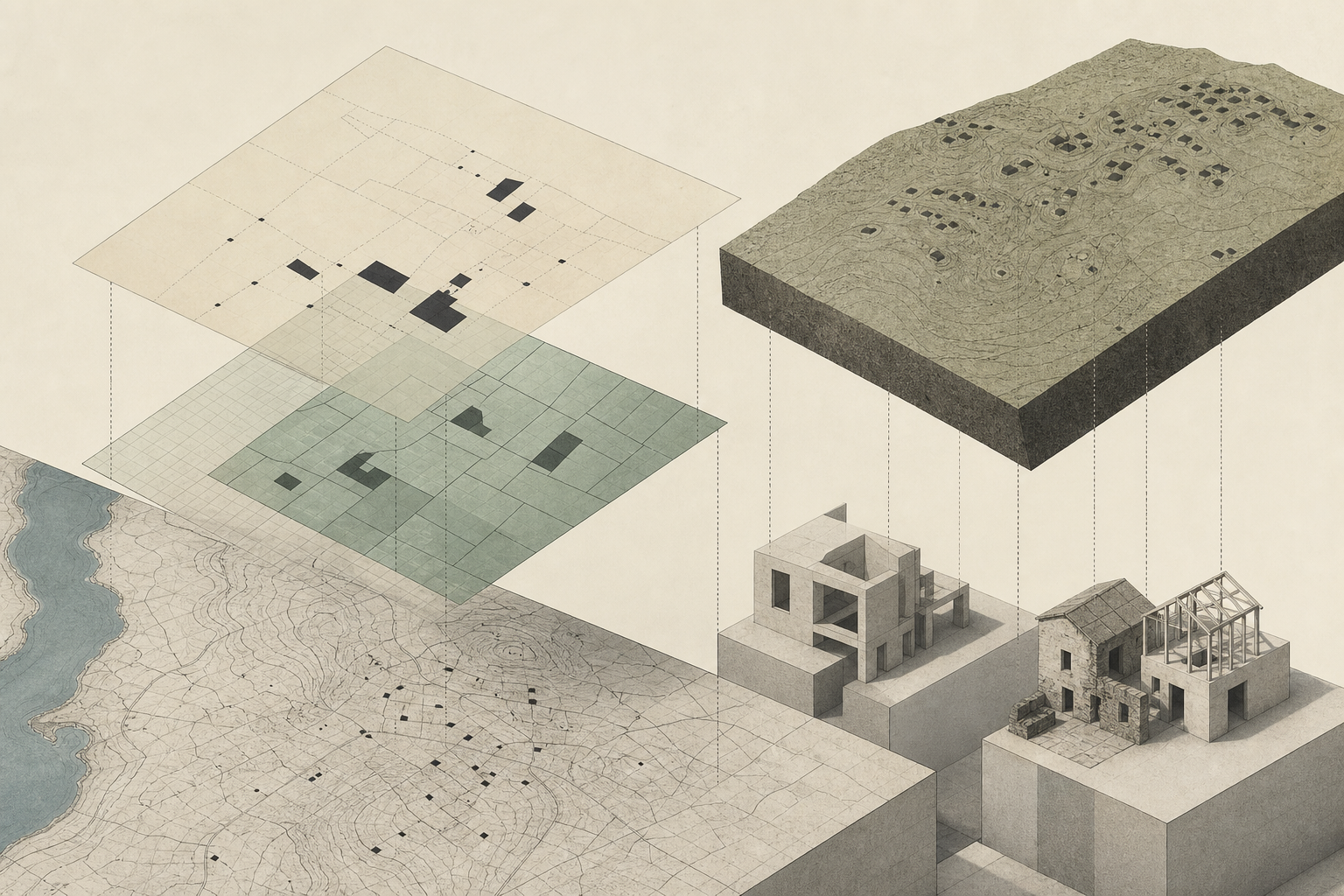
BUPi operates at another scale, particularly in areas where rural property had not been georeferenced. Locating registered plots is essential for forest management, network installation, civil protection and land consolidation. It also reduces uncertainty in operations that depend on access, boundaries and compatibility with infrastructure. Georeferencing does not, however, replace registration, spatial planning or the resolution of overlaps.
Portugal frequently discusses the lack of available land. Part of that shortage is physical or regulatory. Another part is informational. Unknown territory, dispersed assets and incompatible databases turn potential assets into deferred decisions.
Key points
1. Estamo has inventoried around 80,000 public properties and transferred 95 assets to 64 municipalities since 2024. 2. BUPi identified 46% of the area covered by mainland municipalities without a land register. 3. Inventories and georeferencing do not make a property developable, but they reduce uncertainty and improve decisions about use, investment and protection.
Note
A plot may belong to the State and still be unsuitable for housing. Legal availability, planning suitability and economic viability are separate checks.
Closing
The land register rarely appears in the final image of a home, a road or a park. It is, however, at the beginning of all of them. Treating territorial data as public infrastructure makes it possible to prepare projects with fewer surprises, protect what should not be built on and mobilise more quickly what can serve the city.
Sources
idealista/news / Lusa, 24 September 2026. Estamo has registered around 80,000 State-owned properties. idealista/news / Lusa, 24 September 2026. BUPi identifies 46% of the area in mainland Portugal.