Trees and shade for more liveable cities
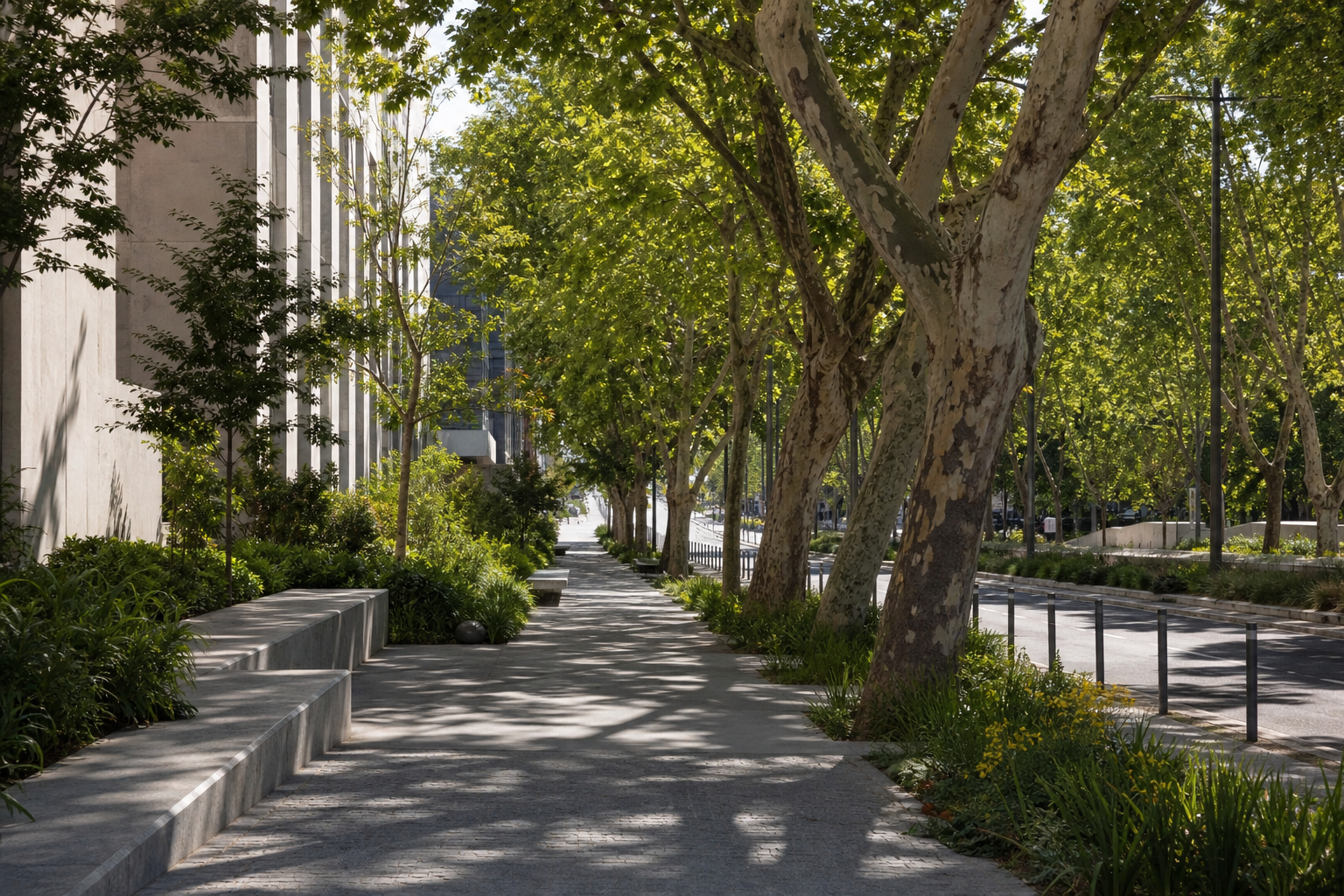
Increasing urban tree canopy is not merely a landscaping choice. Trees influence temperature, drainage, pedestrian comfort and the capacity to adapt to climate change.
The PRO NAT.URBE programme places urban vegetation within a national strategy extending to 2035. The challenge will be to secure the space, water and maintenance required for trees to grow and deliver tangible benefits.
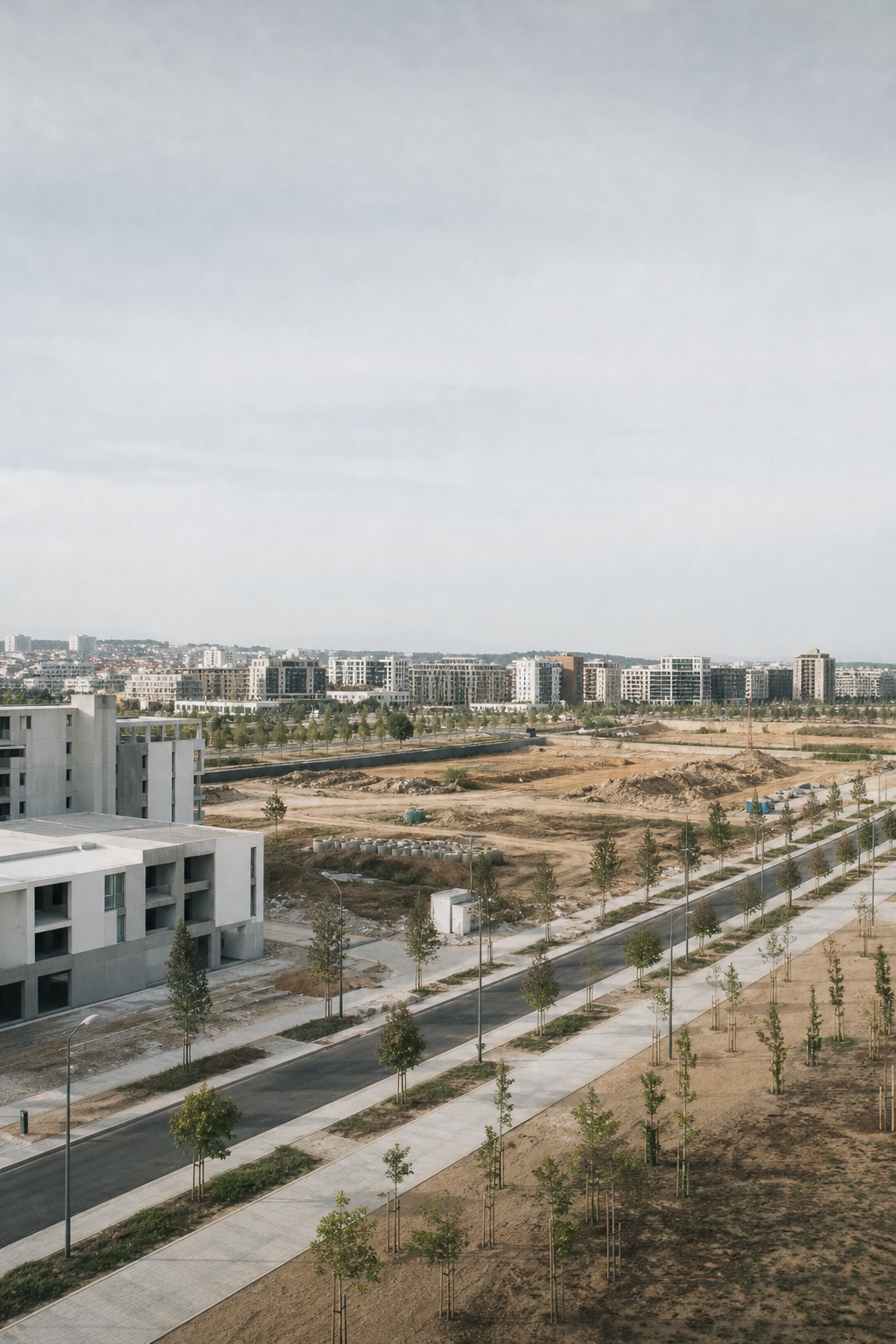
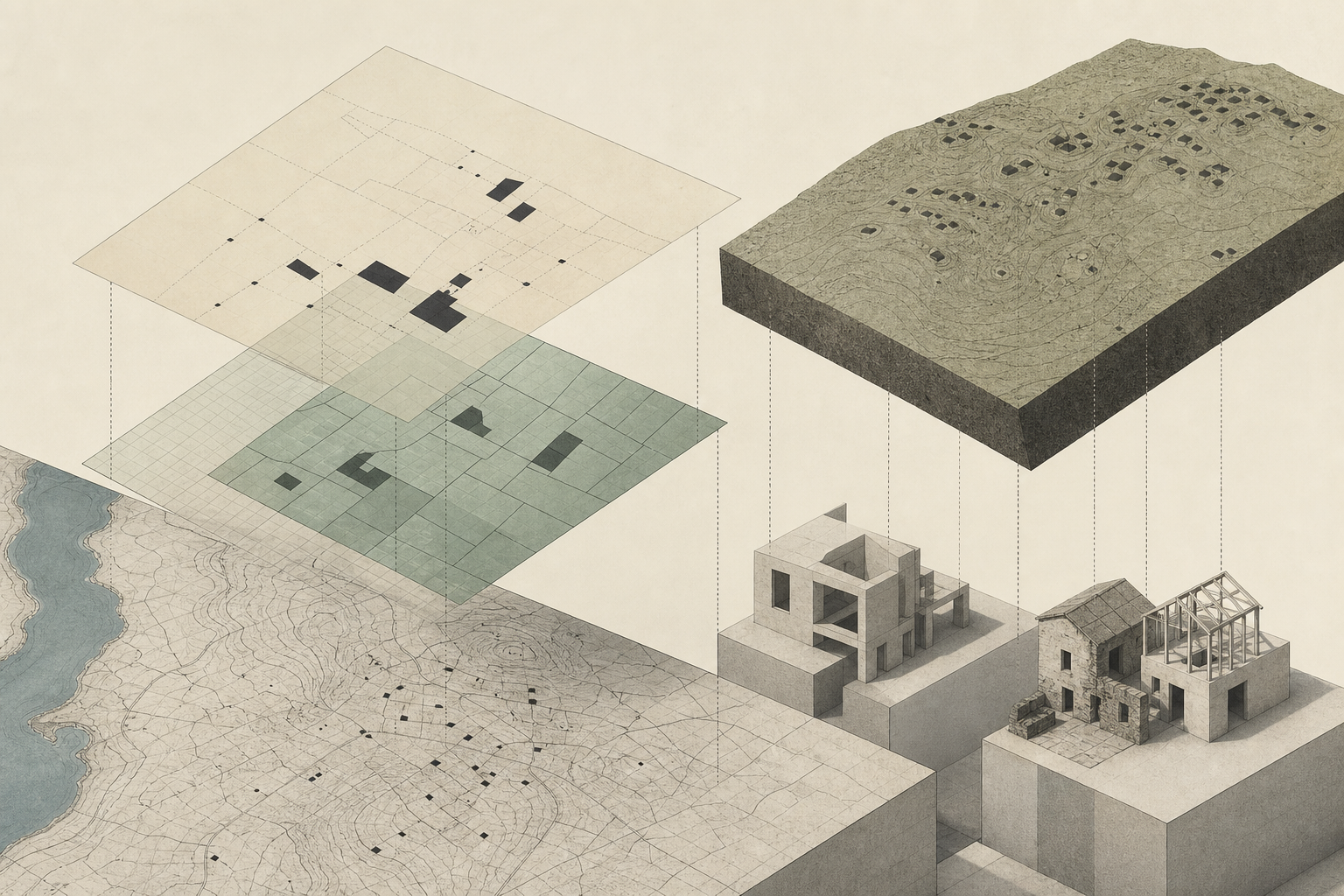
The PRO NAT.URBE programme establishes a strategy to restore green spaces and increase urban tree canopy between 2026 and 2035. Implementation will be the responsibility of municipalities and will be monitored using georeferenced information from the Direção Geral do Território. This approach makes it possible to treat urban vegetation as part of how cities function, rather than merely as a series of isolated interventions.
Planting trees does not, in itself, guarantee shade or comfort. Each tree needs an adequate volume of soil, access to water, room for its roots to develop and protection during construction work. It also needs maintenance after planting. When placed in a tree pit that is too small, above incompatible utilities or in a location without suitable irrigation, it may survive only briefly and never achieve the expected performance.
The choice of locations should respond to the specific needs of each area. Temperature maps, the extent of impermeable surfaces, pedestrian routes, the location of facilities and the age of the population help identify where shade can provide the greatest benefit. Measuring only the number of trees or the average percentage of tree canopy can conceal significant differences between neighbourhoods.
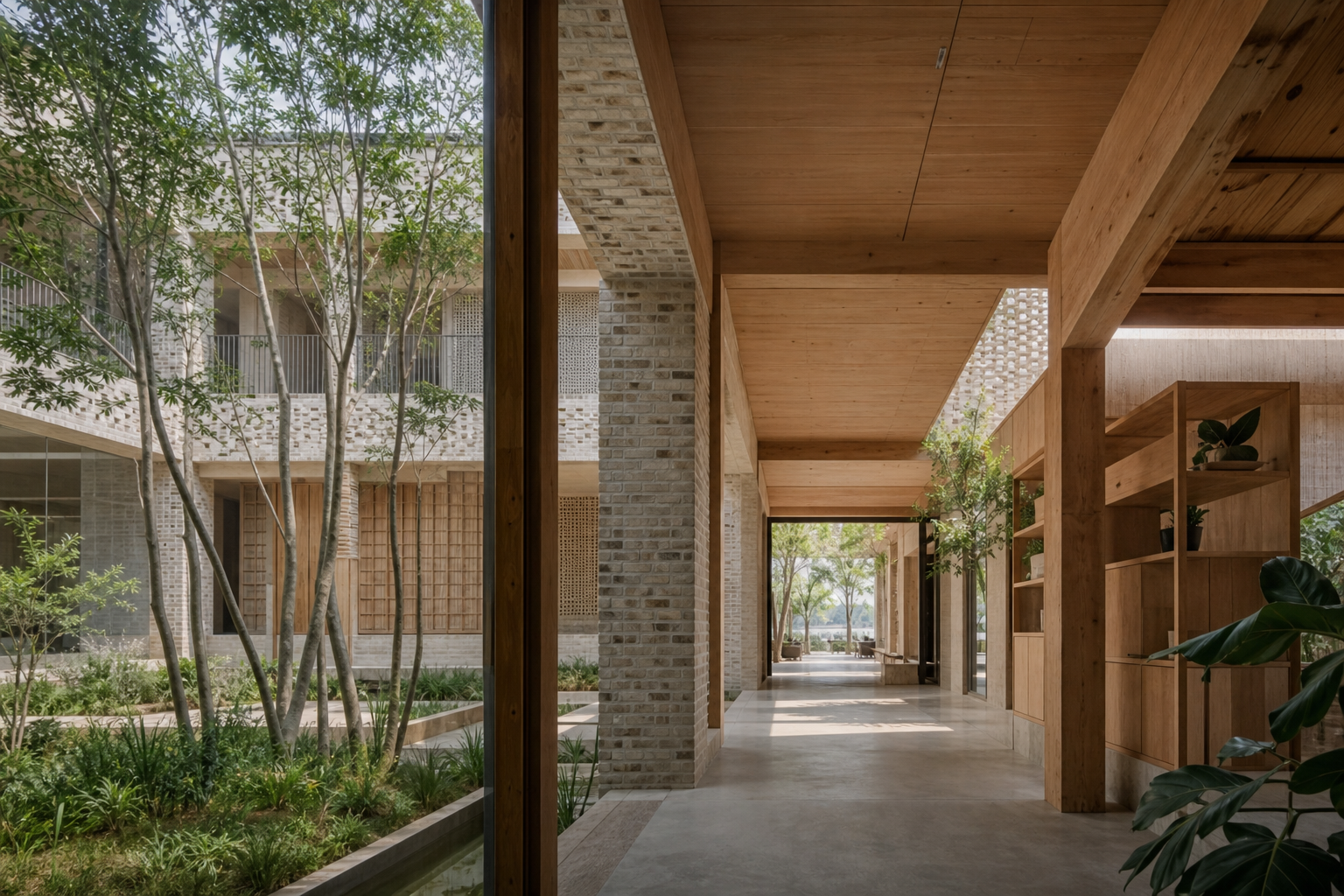
The Portuguese practice OODA's design for a social housing block in Prague shows how these matters can be integrated. The proposal combines municipal housing, retail and a landscaped square, increasing the courtyard's permeable surface. The value of the example lies in the relationship between permeable ground, collective space and urban form, rather than in directly replicating the solution.
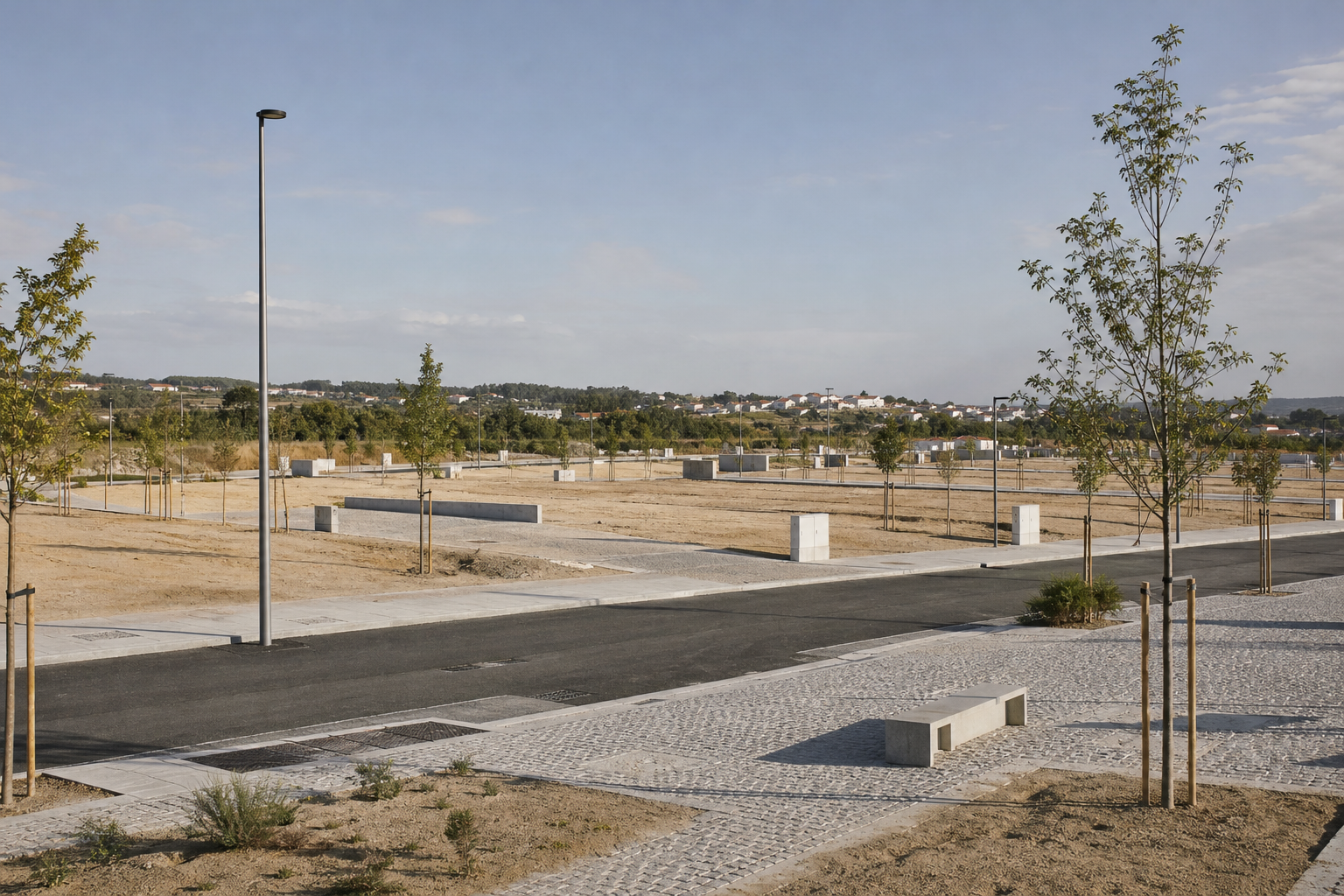
In Portugal, this coordination will be particularly important in land development and regeneration schemes. Space for trees should be planned at the same time as pavements, lighting, façades and underground utilities. If vegetation is introduced only at the end, conflicts with other infrastructure restrict growth and increase maintenance costs.
This perspective also changes the approach to budgeting. Planting comes to include soil preparation, drainage, irrigation, maintenance and eventual replacement. Like paving or a pipe, an urban tree should be considered throughout its life cycle. Treating shade as infrastructure means securing the conditions required for greenery to grow, endure and genuinely improve public space.