No. 01
May 2026
MATTERS No. 1: choosing a home with clear criteria
The May issue examines the criteria that should precede the choice of a home, from type and size to solar orientation, materials and location.
Ama Grupo Imobiliário®
MATTERS No. 1: choosing a home with clear criteria
The May issue examines the criteria that should precede the choice of a home, from type and size to solar orientation, materials and location.
In this issue
01 · Article
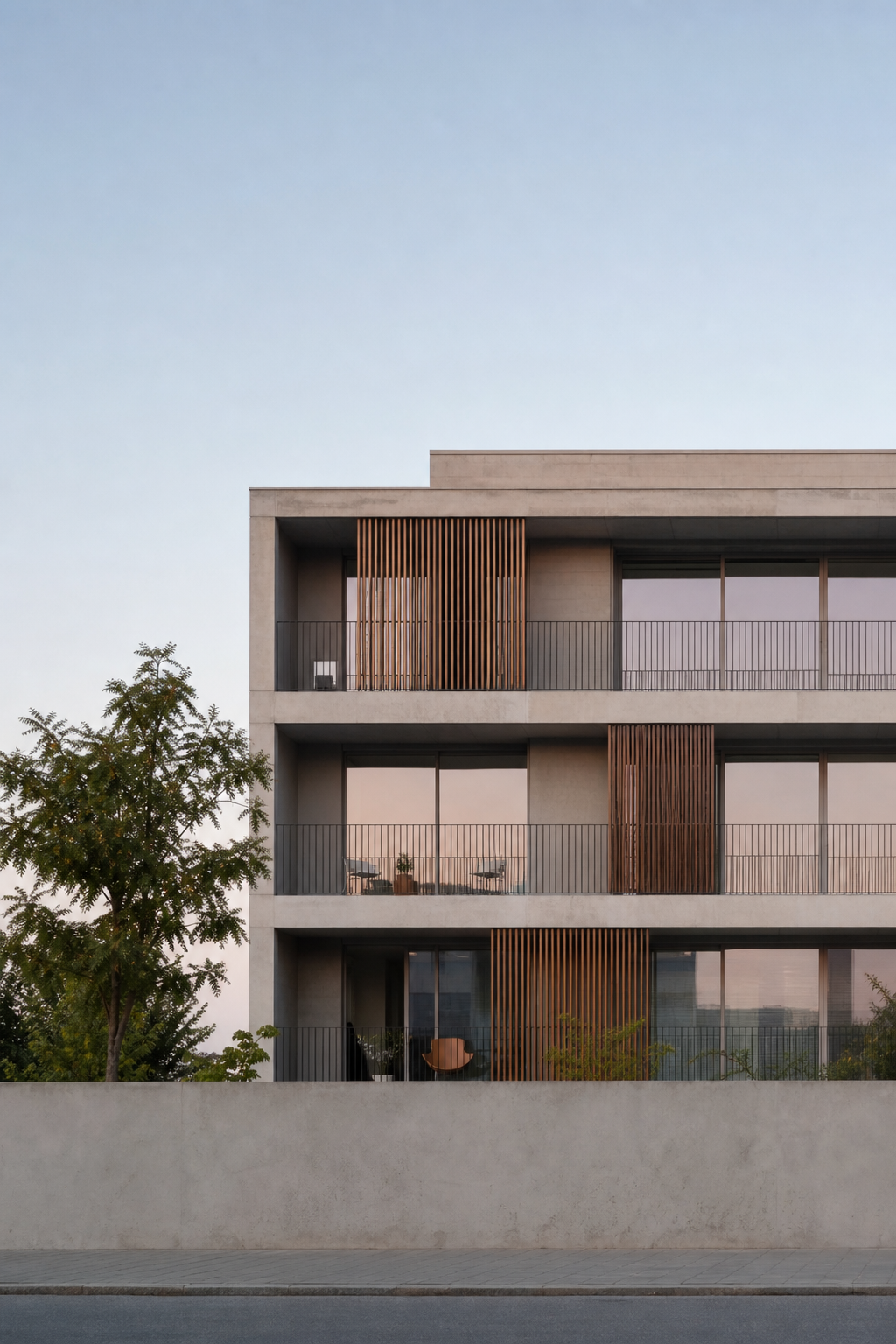
Apartment or house: the choice begins with use
The distinction between an apartment and a house becomes meaningful when considered alongside mobility, privacy, maintenance and future use.
Choosing between an apartment and a house is not simply a decision about building form. It means understanding which option better suits the occupants’ daily routine and the period for which they expect to use the property.
An apartment often makes it easier to live close to public transport, shops and other urban services. It may also distribute some maintenance responsibilities across the building’s common areas, although this involves shared costs and specific rules of use. The assessment should consider privacy, noise, access, the presence of a lift and the relationship between the individual unit and shared spaces.
A house may provide greater independence, outdoor space and separation from neighbouring properties. In return, maintenance of the facade, roof, outdoor areas and equipment generally falls to the owner. Distance from urban centres may also increase travel time and costs.
Intended use changes the criteria. A permanent residence requires attention to the distance from work, schools, healthcare and support networks. A second home or a property intended for rental raises other questions, including frequency of use, remote management and demand in the area.
It is also important to anticipate change. Household composition, working from home, reduced mobility or the need for family support may alter how the space is used. The appropriate property type is the one that meets present needs without creating unnecessary obstacles in the future.
02 · Article
The right size: space, light and materials
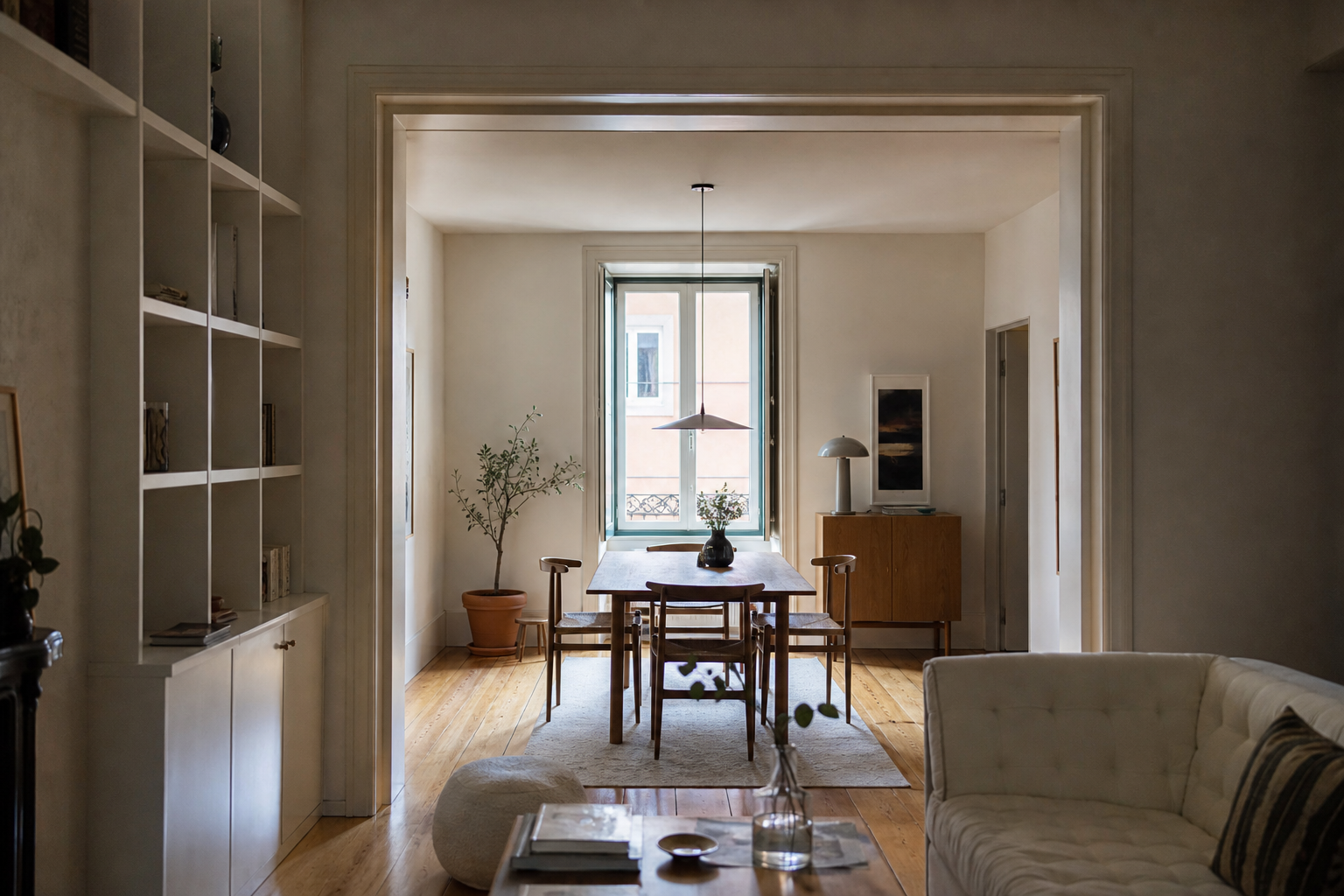
A home should be assessed beyond its advertised size and number of rooms, taking account of proportion, circulation, storage, natural light and material quality.
The floor area of a home should be understood as a resource rather than simply as a number. Two properties of similar size may provide very different experiences because of room shapes, circulation and the relationship between private and shared areas.
An additional room may serve as an office, bedroom or support space. Its usefulness, however, depends on its dimensions, natural light, ventilation and ability to accommodate furniture without obstructing movement. Long corridors, unused corners and areas that are difficult to furnish reduce the amount of space that can be used effectively.
Integrated storage helps free up space and allows the home to adapt to different stages of life. The flexibility of the layout should also be considered. Well positioned doors, proportionate rooms and straightforward connections between the kitchen, living room and outdoor areas can improve use without requiring more floor area.
Solar orientation affects natural light, indoor temperature and heating or cooling needs. In Portugal, a south facing facade tends to receive light for longer periods, while western exposure may lead to greater heat gain late in the day. The effect varies according to the season, region, shading, window size and surrounding buildings.
Materials and construction systems are equally relevant. Thermal and acoustic insulation, window quality, solar protection and ventilation contribute to comfort and help control energy consumption. Passive design solutions can reduce energy needs, but the outcome depends on the design, construction quality and use of the building.
In an existing property, signs of damp, cracks, wear and previous alterations should be examined. In a new property, construction quality and equipment operation should be checked. In both cases, the appearance of the finishes is not a substitute for assessing building performance.

03 · Article
The address continues beyond the front door
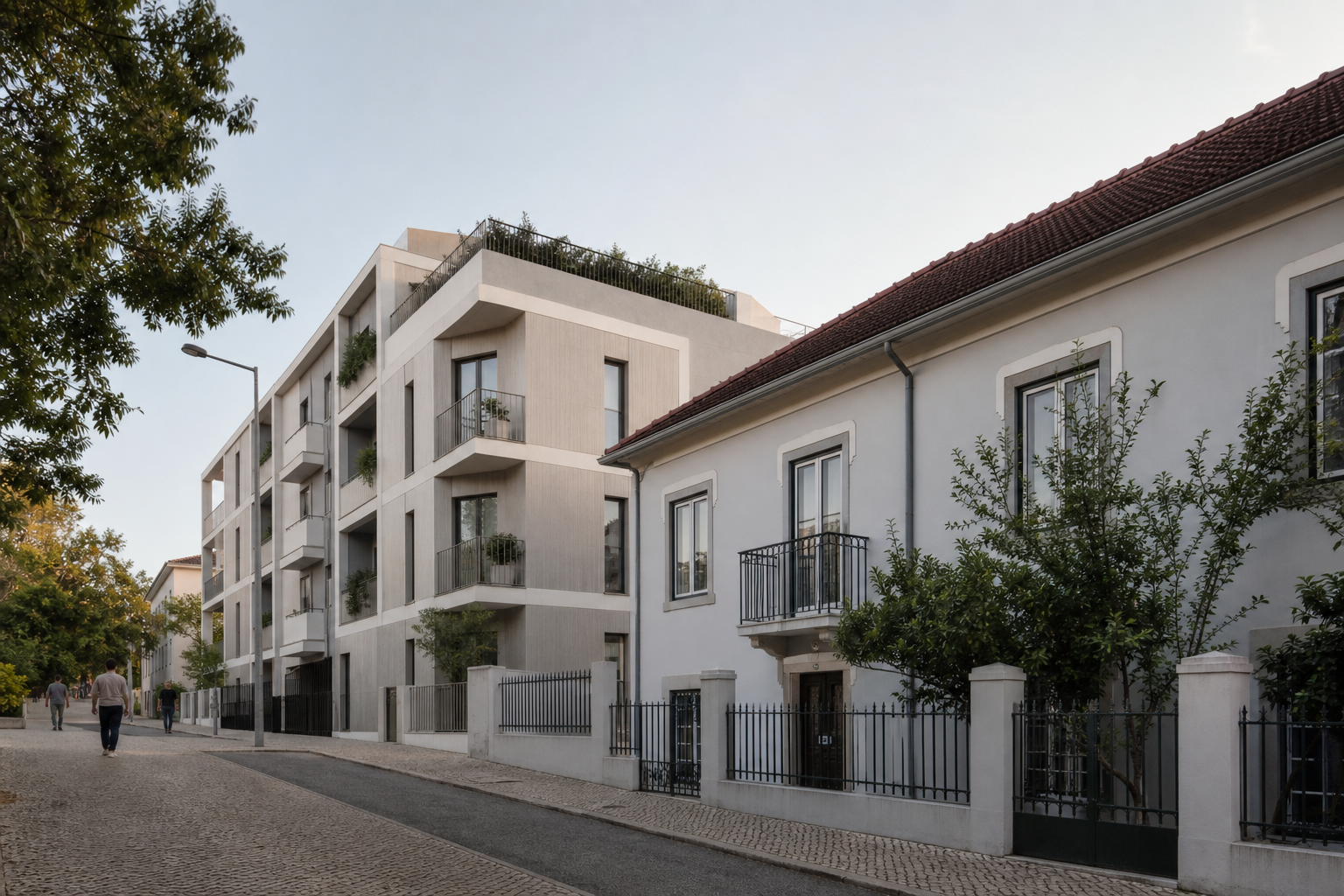
A viewing should include the neighbourhood, access and the condition of the property, because the everyday quality of a home also depends on its surroundings.
Location is not limited to the name of the street or the direct distance to the city centre. It should be assessed through the journeys that will form part of daily life, including travel to work, school, healthcare, shops and public transport networks.
The actual duration of these journeys may vary throughout the day. The surrounding area should therefore be observed at different times. Traffic, parking, noise, lighting, pedestrian activity and local commerce can change between the morning, evening and weekend.
Proximity to green spaces, public facilities and local shops can reduce travel and support everyday life. Pavement accessibility, street gradients and the continuity of walking routes are also relevant to people with reduced mobility, children and older residents.
It is also important to understand whether the area is established or undergoing change. New construction, road alterations and changes in land use may affect views, noise, traffic and demand. Observation of the site should therefore be supported by consultation of the available planning information.
Inside the property, the viewing should test what photographs do not reveal. Natural light, ventilation, outdoor and internal noise, the operation of doors, windows and equipment, and the condition of common areas can help identify work that may be required.
Signs of water ingress, persistent odours, cracks or recent repairs deserve attention. They do not in themselves confirm a structural problem, but they may justify a technical assessment. The same principle applies to the condition of the building and to costs that may arise after purchase.
A suitable home is not necessarily the one with the greatest number of features. It is the one that establishes a sustainable relationship between budget, intended use, location and capacity to adapt.