
No. 04
August 2026
The rules of access to housing have changed
More selective lending, record-high prices and supply that continues to fall short of demand.
Ama Grupo Imobiliário®
The rules of access to housing have changed
More selective lending, record-high prices and supply that continues to fall short of demand.
In this issue

01 · Article
Housing credit: a new safety margin
Banco de Portugal lowered the recommended limit for financial effort and simplified maximum loan terms. The change makes real purchasing capacity even more decisive.
Since 1 August 2026, new credit agreements assessed by banks have been subject to a revised macroprudential recommendation. The most direct change concerns the DSTI ratio: the share of income allocated to servicing total debt now has a recommended ceiling of 45%, down from the previous 50%.
Maturities have also changed. The recommended maximum term is 40 years for borrowers aged up to 35 and 35 years for those over 35. Where a loan has more than one borrower, the age of the oldest person is used.
These rules do not automatically determine how much each household can borrow. Banks continue to assess income, employment stability, other debts, available deposit and the risk of the transaction. However, the new framework reduces the room for proposals at the limit of financial capacity.
For those looking for a home, the practical consequence is simple: the advertised price matters less than the sustainable monthly payment. The decision should begin with the monthly budget and only then move to the property. For housing developers, the conclusion is equally clear: types, areas and prices must correspond to demand that can secure financing, not merely demand that expresses interest.
The new rule does not solve the shortage of homes. It does, however, introduce an additional filter in a market where prices remain high. Access to housing will depend even more on the relationship between product, price and financial capacity.

02 · Article
Record-high prices, a more selective market
The median asking price reached a new high in July. At the same time, more prudent lending widens the gap between asking prices and purchasing capacity.
Housing asking prices in Portugal rose again in July 2026. According to the index published by idealista and reported by Dinheiro Vivo, the median advertised value reached €3,210 per square metre, 8% higher than in the same month of the previous year.
The figure confirms pressure on the market, but it does not mean that every property appreciates in the same way or that any price will be absorbed. Supply indices measure advertised values; a buyer's decision depends on income, financing, location, the condition of the property and comparison with real alternatives.
From August, the reduction in the recommended financial-effort limit for credit makes this distinction even more relevant. A household may recognise value in a home and still be unable to finance the purchase under the required conditions.
The market is therefore entering a more selective phase. Good projects continue to benefit from the shortage of supply, but consistency between area, type, location and price becomes central. Square metres with no function, solutions that are difficult to maintain or values supported solely by the general market trend may extend the sales period.
For buyers, it is important to compare the total cost, not only the price per square metre. For developers, it is important to design around the likely customer budget. In a market at record highs, product discipline is as important as demand.
03 · Article
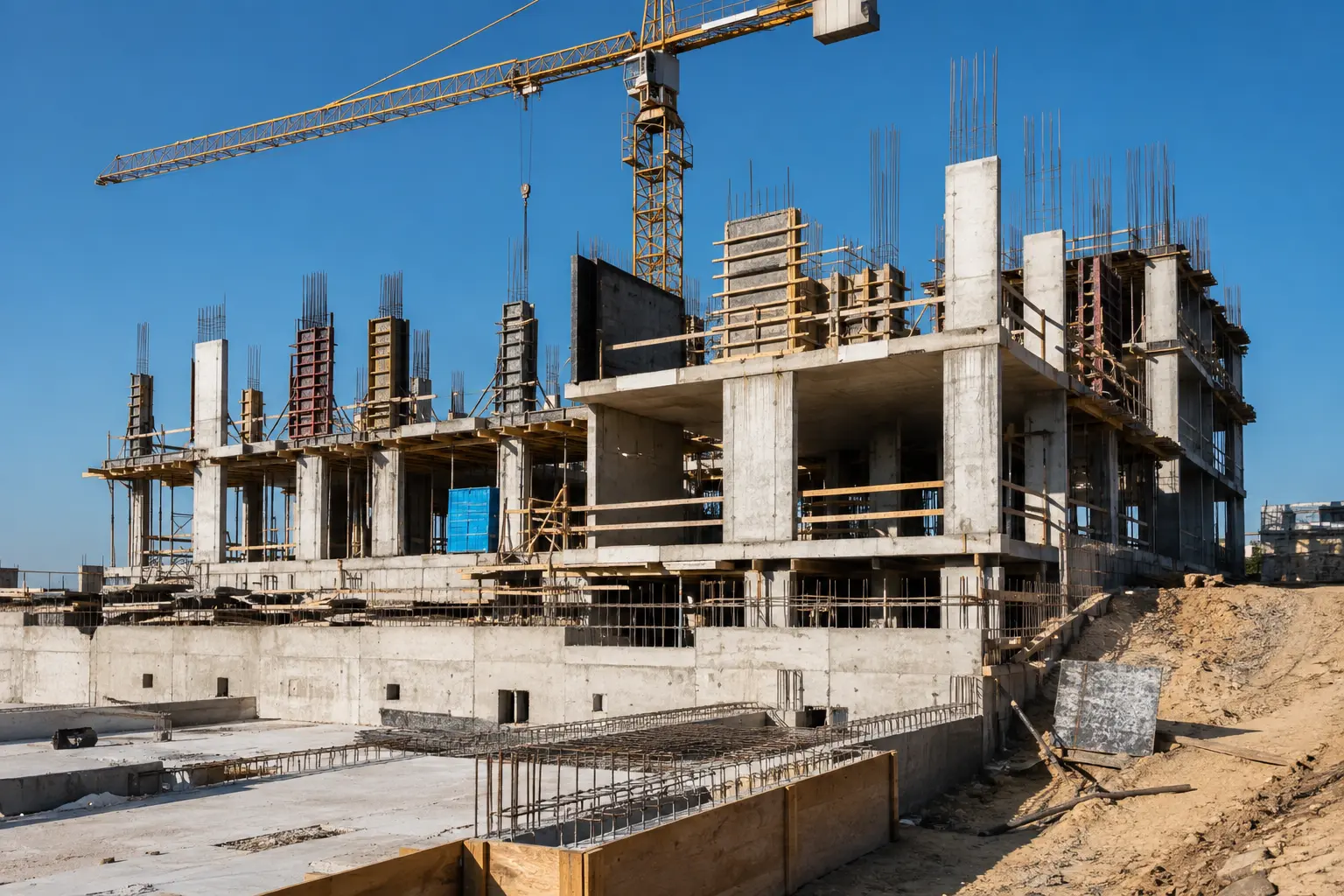
The housing shortage is also an execution problem
Portugal is building below the level the sector estimates is needed. Between land and a completed home lie decisions, permits, financing, productive capacity and time.
Portugal should be building around 60,000 homes a year and is currently producing approximately 40,000, according to the assessment presented by the president of AICCOPN in an interview broadcast by RTP. The difference helps explain why price increases persist even when financing becomes more demanding.
Scarcity is not resolved merely by an intention to build. Each new home depends on a long sequence: land availability, planning framework, design, licensing, financing, procurement, materials, labour, construction and sales. A blockage at any one of these stages delays all those that follow.
For this reason, measuring the housing response only by the number of measures announced is insufficient. The decisive indicator is the number of homes completed, in locations where demand exists and at prices compatible with household income.
Construction also needs predictability. Tax changes without completed regulations, uncertain administrative deadlines or late decisions increase risk and feed into the final cost. The longer and less predictable the process, the greater the margin required to make a project viable.
Increasing supply requires simplification without reducing rigour: clear rules, timely decisions, coordinated designs and the capacity to deliver. Housing becomes accessible when the entire system can transform land and investment into completed homes.