MATTERS Article
House in Granada uses thermal mass and residual materials to address extreme temperatures
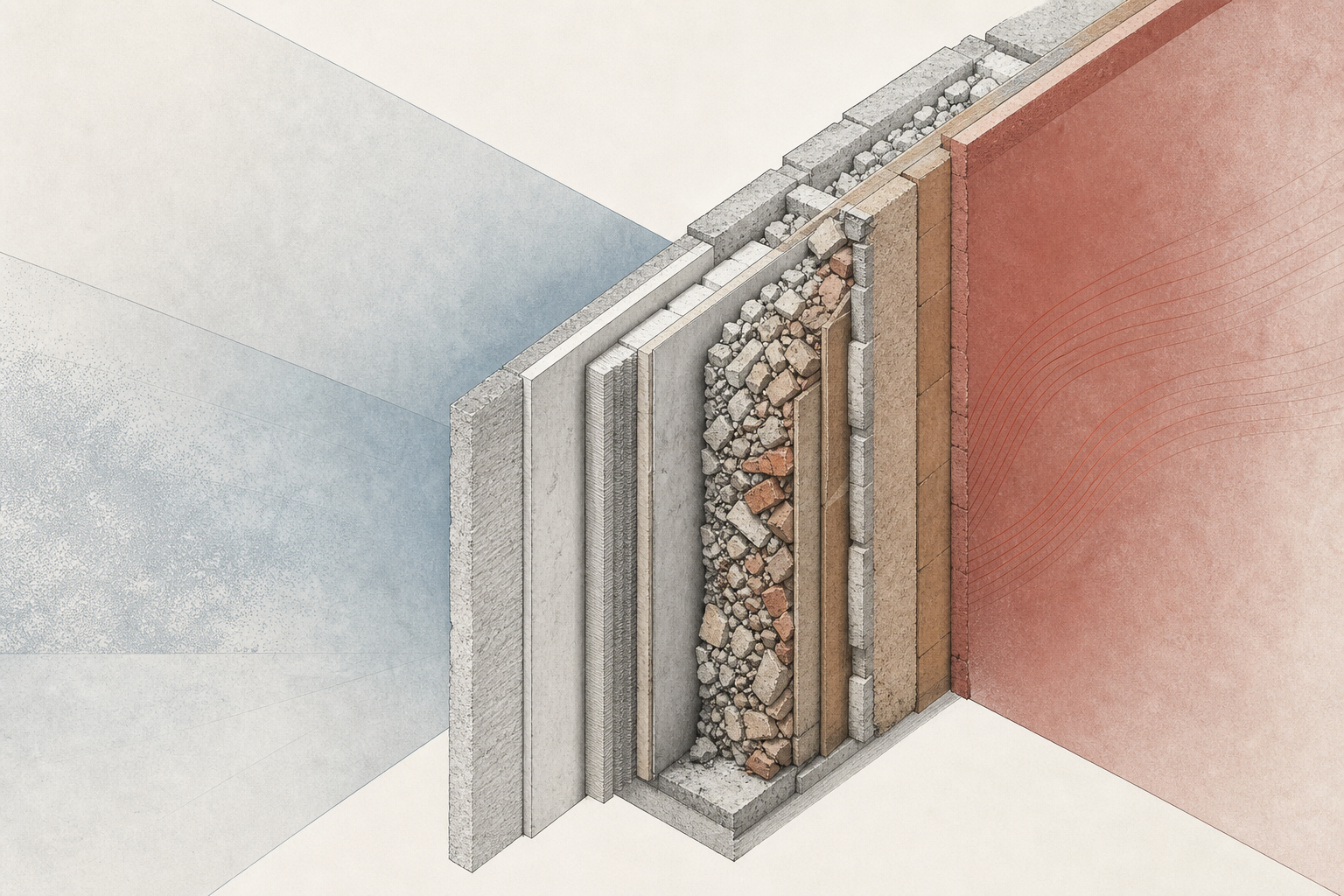
In Zafarraya, a 51-centimetre layered envelope is designed to moderate outdoor fluctuations between approximately −5°C and 35°C.
Designed by Jesús Torres García, the house combines thermal mass and residual materials in a thick building envelope conceived in response to the local temperature range.
The house designed by Jesús Torres García in Zafarraya, Granada, responds to a specific climatic condition: outdoor temperatures ranging from approximately −5°C to 35°C.
The architectural response is concentrated in the building envelope. Measuring 51 centimetres in thickness, this layered structure combines residual materials and thermal mass to reduce the effect of temperature fluctuations inside the house.
The available information identifies the envelope’s composition and thickness as central elements of the strategy. Without adding details about specific materials or measured performance, the project establishes a direct relationship between construction and the outdoor temperature range.
The thickness of the envelope is not presented as an isolated feature: it forms part of the architectural response to the temperature variations recorded at the site.
In this project, climate adaptation is addressed through the physical construction of the house itself. The envelope becomes the main device mediating between outdoor conditions and inhabited space.